

Quick answer
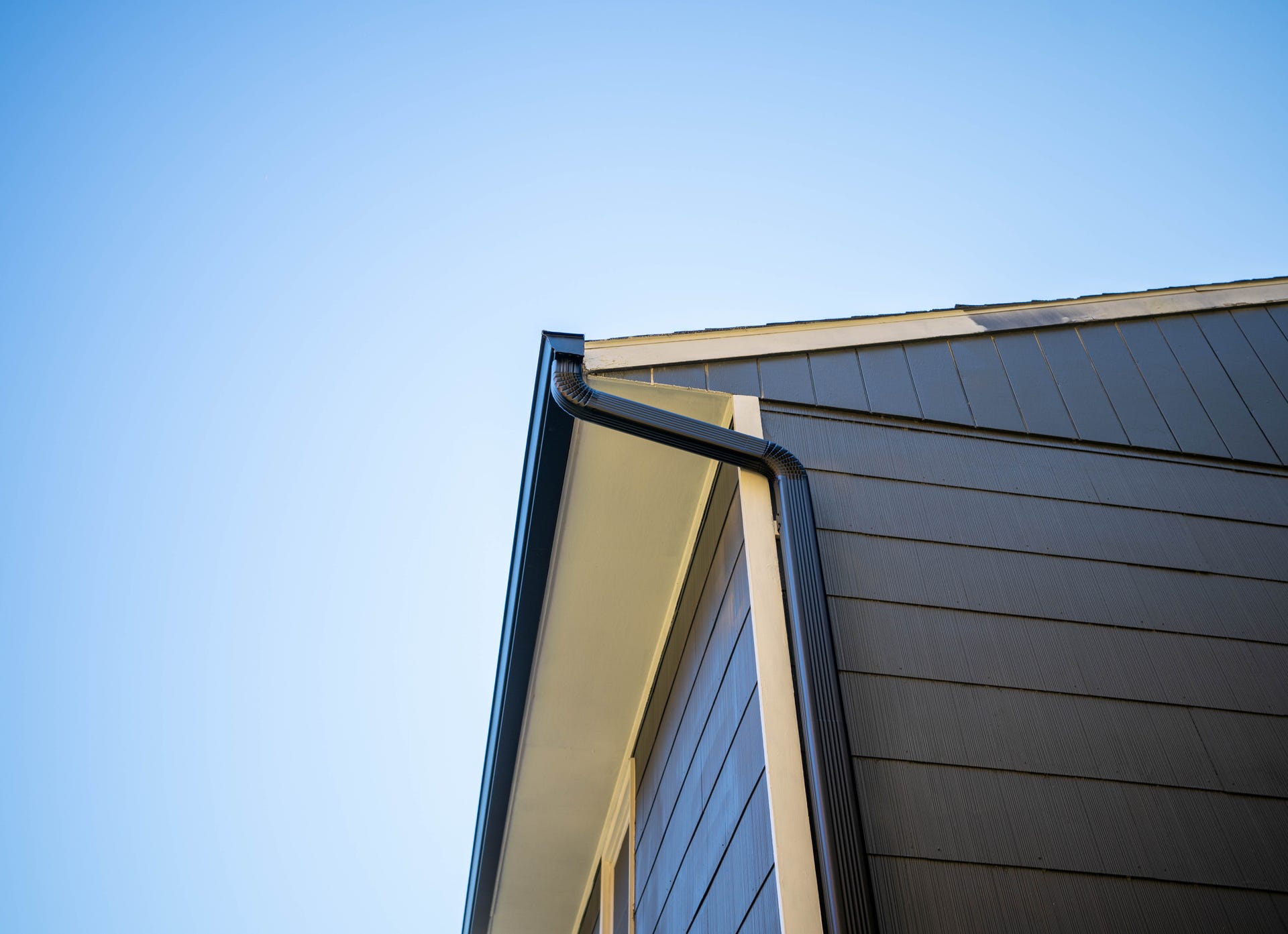
Gutters on an Eichler: An Eichler roof is a shallow, low-pitched plane with wide eaves that sends a lot of water to very few outlets, so the size, slope and placement of each outlet matter more than the length of the gutter. Get those right with a slim seamless gutter that follows the roofline, keep the outlets clear before the rain, and send every downspout away from the glass walls, beam ends and atrium. Call (650) 600-0598 or get a free quote.
Mid-century rooflines
Why an Eichler roof drains differently
Joseph Eichler built his post-and-beam homes for California light, not for gutters. The roof is nearly flat, the eaves are wide and the beams run right out to the edge.
The Peninsula has a lot of these houses. The City of Palo Alto’s Eichler Neighborhood Design Guidelines, adopted by the City Council in April 2018, say well over 2,000 Eichlers were built in Palo Alto, in tracts like Greenmeadow, Fairmeadow and Green Gables. The San Mateo Highlands holds roughly 650 more, by the Eichler Network’s count. In Sunnyvale there are several hundred between Fairbrae, Fairwood, Rancho Verde and Sunnyvale Manor, plus Cherry Chase, and Foster City has them in Bay Vista, Treasure Isle and Marina Point.
The Palo Alto guidelines describe the roofs plainly: slopes that are typically quite shallow, often at a ratio of 3:12, covered with visually flat materials such as tar and gravel or rolled roofing, with exposed rafter tails under extended eaves and wide fascia. That is a very different roof from a 1960s ranch two streets over, with its steeper pitch and long K-style run.
Here is what that means for water. A low-pitched Eichler plane sheds it slowly along the whole overhang and often drains to just one or two outlets. Working from the USGS figure of 27,154 gallons per acre for each inch of rain, a 2,000 square foot roof sends about 1,250 gallons toward its gutters every inch. On an Eichler, a lot of that heads for a single corner.
Why the gutter matters more than it looks
The same Palo Alto guidelines list flat roofs that can be prone to leaks among the known weak points of these houses. A gutter that overflows keeps that roof edge wet, and on a post-and-beam house the edge is structure, not trim. The exposed beam ends and the fascia that ties them together sit right under the drip line. When an outlet backs up, the water finds the beam instead of the downspout, and years of that soften the wood until the gutter has nothing solid to hang on.
What we find
Where Eichler gutters usually fail
Most Eichler gutter calls come down to a handful of problems. Where the water shows up during a storm tells you which one you have.
On a ranch house the classic failure is a long run that sags. On an Eichler a gutter is overflowing at a corner, pitched the wrong way or missing on a short run, and on a low-slope roof that water lands right at the glass. Match what you see in a storm to the table below.
| What you see in a storm | Likely cause | Usual fix |
|---|---|---|
| Water sheeting off one corner and splashing the glass | One outlet carrying the whole roof plane, or that outlet is clogged | Clear it, then size the outlet and downspout for the roof area it drains |
| Overflow along the full length of the overhang | A gutter with no fall, or one pitched away from the outlet | Rehang the run with a steady slope toward the outlet |
| Drips at the exposed beam ends | Water running behind the gutter or spilling at a low spot | Reset the gutter so the back sits tight and the water stays in the trough |
| A dark, soft stripe along the wide fascia | Years of overflow soaking the wood | Repair the wood before new hangers go in |
| Puddles on the patio or at the atrium door | A downspout emptying onto hardscape next to the house | Downspout extensions and redirects that carry the water away |
| Dripping over an entry or a short side run | No gutter on a short run | Add a short seamless gutter with its own outlet |
Glass walls make every mistake visible
Eichlers put floor-to-ceiling glass and atrium doors right under the roof edge. A little overflow from a ranch roof lands in a flower bed. On an Eichler it runs down the glass, across the entry walk or into the atrium. Leaves also collect in atrium and courtyard corners, so those inside corners are among the first places we look on a walkthrough.
Original gutters and old seams
Plenty of Eichlers still carry older sectional gutters with open seams, and those leak at joint after joint. A gutter repair can buy time on a system that is otherwise sound: corners resealed, a run re-sloped, new hidden hangers set into solid wood. When the joints keep failing, replacing the run with one continuous seamless gutter is usually the better call, because seams then fall only at the corners and outlets.
Choosing the system
Gutters that keep an Eichler looking like an Eichler
Nobody buys an Eichler for its gutters. The right system works hard and stays out of the way of the long horizontal line that makes the house.
Most Eichlers do best with a fascia gutter or a low-profile K-style run that follows the roofline instead of hanging below it. A clean K-style in a color matched to the fascia usually keeps the roofline crisp and quiet. Our page on gutter styles walks through the profiles, and colored aluminum gutters let the gutter blend into the trim instead of standing out against it.
Fastening takes some thought. Exposed beams and rafter tails mean there is not always a continuous board to screw into. We choose a profile and hanger method that suits that particular roof edge, using roof straps where there is no fascia to fasten to, so the gutter is held firmly without crowding the beam ends.
Size and slope before length
Because so few outlets carry so much water, sizing matters more on an Eichler than on almost any other house on the Peninsula. A 5-inch K-style gutter with 2×3 downspouts handles a lot of single-story roofs when the pitch and downspout spacing are right. Where one outlet drains a big roof plane, going larger helps. By our own install numbers, a 6-inch gutter holds roughly 40 percent more water than a 5-inch, and a 3×4 downspout drains about twice as fast as a 2×3.
Each run then gets a steady fall toward its outlet. On an Eichler that slope has to be set with care, because the fascia line is a strong design feature and a gutter that visibly drops away from it looks wrong. We form every run on our truck as a seamless gutter cut to the exact length, so even a short Eichler run goes up as one piece with no factory seams.
Plan where the water lands
- Downspouts placed away from glass walls, entry walks and atrium doors.
- Each outlet sized for the roof area it actually drains.
- No downspout emptying onto a patio slab tight against the house.
- Downspout extensions and redirects that carry water to ground sloping away.
- Soft wood at the beam ends or fascia repaired before new hangers go in.
- A gutter color that matches the trim so it reads as part of the house.
If you are planning a remodel, bring the gutters into the conversation early. On Eichler remodels we talk through outlet placement before the siding and landscape plans lock it in. If a flat section drains through a roof drain inside the walls, that line belongs with a roofer or plumber.
Year-round care
Keeping a low-slope roof edge clear
A shallow roof does not push debris off the way a steep one does. Leaves and needles settle on it, and they stay.
Low-slope roofs hold debris longer than steep ones, and the trees on Eichler blocks keep supplying it. In Sunnyvale, sycamore, oak, liquidambar and Chinese pistache drop leaves and seed pods from fall into winter, right when the rain arrives, and liquidambar seed balls can block a downspout outright. In Palo Alto, the protected oaks and redwoods add leaves, acorns and needles most of the year. Our guide on how often to clean gutters on the Peninsula lays out the drop calendar tree by tree.
- Clean before the rain.Book the main cleaning in fall, before the first real storm, and plan a spring visit if oaks or bay trees hang over the roof.
- Clear the outlets, not just the trough.On an Eichler the outlet is the system. Every downspout should be flushed until water runs out the bottom.
- Check corners and atrium edges.Inside corners and courtyard edges collect leaves, and they are where overflow usually starts.
- Watch the first big storm.From inside, note every spot where water sheets down the glass or drips at a beam.
Guards, needles and embers
Fine redwood and pine needles slip straight through coarse screens. BroGuard is an all-metal stainless micro-mesh guard with an opening finer than a redwood or pine needle, so debris sits on top while heavy rain passes through. It sits flush with a low profile, which suits a clean Eichler edge.
Because it is metal, it also adds nothing flammable at the roofline. CAL FIRE notes that embers can ignite homes up to a mile away, so a gutter full of dry needles matters even outside the mapped hazard zones. Our fire zone gutter check shows where your address falls.
If you would rather not track any of this, our gutter maintenance program schedules visits around the local seasons, and every gutter cleaning includes flushing and testing each downspout.
Own an Eichler and want a straight answer about its gutters? Call (650) 600-0598
Get a Free QuoteFrequently Asked Questions
In most cases, yes. A flat or low-pitched Eichler roof sends water off slowly along the whole overhang, so without a gutter it drips onto walkways, soaks the fascia and beam ends, and splashes against the glass walls. A slim gutter that follows the roofline collects that water and sends it to downspouts placed away from the house.
Most Eichlers do best with a fascia gutter or a low-profile K-style run that follows the clean roofline instead of hanging below it. A color matched to the trim keeps the line quiet. Where there is no fascia to fasten to, roof straps can hold the gutter without crowding the exposed beams.
A low-pitched Eichler roof often drains a whole roof plane to one or two outlets. If that outlet is clogged, too small, or the gutter is pitched away from it, the water spills at the corner. Clear the outlet first. If it still overflows in a heavy storm, the outlet and downspout probably need to be sized for the roof area they drain.
They can. On a post-and-beam house the beam ends and the wide fascia sit right under the drip line. Years of overflow keep that wood wet until it softens and rots, and soft wood cannot hold gutter hangers. Fixing the gutter early protects the beams, and any damaged wood should be repaired before new hangers go in.
Most Peninsula homes need a cleaning in fall before the rain and another in spring. Low-slope roofs hold debris longer than steep ones, so Eichlers under oaks, redwoods or liquidambar may need a third visit. Every cleaning should include flushing each downspout, because on an Eichler one blocked outlet can be carrying most of the roof.
Free quotes
Ready for gutters that suit your Eichler, from Sunnyvale to the San Mateo Highlands?
Free, no-pressure written estimates from your local Sunnyvale crew. Outlets sized for the roof, seamless gutters formed on-site and downspouts sent away from the glass.
The Brothers That Just Do Gutters · Sunnyvale · (650) 600-0598 · Serving Sunnyvale, CA and the Peninsula, from Santa Clara to San Francisco