

Category: Gutter Maintenance

Gutter cleaning, gutter guard and downspout advice for Sunnyvale and Peninsula homes from the local crew at The Brothers That Just Do Gutters.

Replacing Gutters on an Older Peninsula Home: What to Expect

Crew member feeding a dark seamless gutter run out of the gutter machine in the back of the work truck

Quick answer

Replacing gutters on an older Peninsula home: Replace instead of repairing when the joints leak all along the house, the hangers keep pulling out of the wood, or the same runs overflow every winter even when they are clean. A good replacement is more than new metal: each run is sized for the roof above it, formed as one seamless gutter at your curb, hung on screw hangers set into solid wood, and given downspouts that carry the water away from the house. Call (650) 600-0598 or get a free quote.

Postwar rooflines

Why so many Peninsula gutters are due for replacement

A lot of the Peninsula was built in a hurry after the war, and plenty of those houses are still wearing their first or second set of gutters.

Sunnyvale is a good example. The Metropolitan Transportation Commission’s Sunnyvale census history shows a town of 9,829 people in 1950 that had grown to 52,898 by 1960 and 95,408 by 1970. The 1960 count alone found 15,236 housing units. The story repeats up and down the Peninsula. Mountain View was mostly built between 1950 and 1970. In West Menlo Park the median home dates to 1963, and in Sharon Heights Census figures put the median at 1971, with 82 percent of homes built before 1980.

Older doesn’t automatically mean worn out. But the systems we take down on these homes tend to share the same weak points.

Rain here also arrives in a particular way. Our installation page puts Sunnyvale at roughly 13 to 15 inches a year, nearly all of it between November and April. Working from the USGS figure of 27,154 gallons per acre for each inch of rain, a 2,000 square foot roof sends about 1,250 gallons to its gutters every inch.

9,829 to 95,408Sunnyvale’s population from 1950 to 1970, per MTC’s census history
1963median year built in West Menlo Park, per Census figures
82%of Sharon Heights homes built before 1980, per Census figures
~1,250 galoff a 2,000 sq ft roof for each inch of rain, from the USGS per-acre figure

What an original system usually looks like

Three things come up again and again. First, the gutters are sectional, short lengths joined on the house, with every joint depending on old sealant. Second, they hang on nail and ferrule hangers: a long spike driven through the front of the gutter, through a tube and into the wood. The wood swells in the wet months and shrinks through the dry summer, slowly working the spikes loose. Third, the whole house carries one gutter size, even though additions, second stories and new tile roofs have since changed how much water reaches each run.

What we find

Repair or replace: how to tell on an older home

We would rather keep a sound system working than sell a new one. The question is whether the problem is one spot or the whole system.

Walk the house during a real storm and note where water comes over the edge, where joints drip and where the wood behind the gutter is stained. One or two items from the repair column below is normal for an older house. Several from the replace column usually means patching has stopped paying off.

What you seeWhat it usually meansUsual call
A drip at one or two corners on an otherwise solid runSealant failing at a few jointsRepair the corners
One run sagging, wood behind it still firmHangers working looseRefasten with new hidden hangers
Leaks at joint after joint on a sectional systemOld sealant giving out everywhere at onceReplace with seamless gutters
Water over the front edge right after a cleaningA run too small or pitched wrong for the roof above itRe-slope or upsize that run
Rust holes in steel gutters, especially near the coastThe metal itself is failingReplace the system
Soft, dark wood behind several runsYears of overflow soaking the roof edgeFix the wood, then replace the runs

Look behind the gutter, not just at it

The wood the gutter hangs on decides how long any fix will last. A hanger only holds in solid wood, and on older Peninsula homes that edge has often taken years of fog, overflow and drips. If the wood near a sagging run gives when you push on it, a new hanger will not hold there either. Peeling paint along the roof edge or stained stucco below a corner tells the same story from the ground.

Things that do not mean you need new gutters

  • A gutter that overflows because the outlet is packed with needles or seed pods. That is a cleaning job.
  • A downspout knocked loose or crushed at the bottom. That section can be replaced on its own.
  • One sagging run on firm wood. New hangers fix it.
  • Overflow at a single corner below a valley. Often a second downspout or a bigger outlet solves it.

Our gutter repair page covers the single-visit fixes. Not sure which side of the line you are on? A free estimate prices both when both are real options.

Choosing the system

Choosing size, metal and hangers for the new gutters

Two systems can look the same from the curb and last very different lengths of time. Most of the difference is in choices you never see from the street.

Replacement is the moment to fix what the original builder got wrong, so plan the new system run by run instead of copying the old one.

Size each run for the roof above it

We form 5, 6 and 7 inch gutters. A 5 inch K-style with 2 by 3 inch downspouts handles most single-story roofs when the pitch and downspout spacing are right, and a run over about 40 feet usually wants a second downspout. A 6 inch gutter holds about 40 percent more water and pairs with 3 by 4 inch downspouts, which drain about twice as fast as 2 by 3. That is the usual call below valleys, under an upper roof and along tile roofs. Mixing sizes on one house is common and often the most cost-effective plan.

Pick a metal for how it will age

Every gutter we install is metal. Colored aluminum costs the least, comes in baked-on colors and does not rust, which makes it the everyday pick for most homes. Copper costs the most and weathers to a patina. Galvalume and galvanized steel sit in between. Near the fog and salt air in Pacifica, Daly City and western San Francisco, lean toward aluminum, copper or Galvalume rather than plain galvanized steel. Our specialty materials page compares all four.

Match the profile to the house

K-style, with its flat back and molded front, carries a lot of water for its size and suits most ranch homes. Older houses with deep eaves and decorative trim are a different job. In Burlingame’s Easton Addition or the Old Quad in Santa Clara, a standard K-style hung tight to the board can bury the very detail that makes the house. Half-round, hung on its own brackets, reads softer and suits period homes and copper work. See our gutter styles page.

What your estimate should name

  • The gutter size for each run, not one size for the whole house.
  • The downspout size and where each one will send its water.
  • The hanger type. Quick Screw hidden hangers are the strongest option we install; nail and ferrule is what failed the first time.
  • How corners are sealed. Ours are sealed in three places: the seam, the inside overlap and the top.
  • The metal and color, matched to the trim.
  • Any soft wood that has to be dealt with before the new gutters go up.

Install day

What gutter replacement day looks like

Most homeowners have never watched a gutter get made. On a replacement, it happens in your driveway.

Our truck carries the gutter machine, so each run is formed on site to the exact length of that stretch of roof, with seams only at the corners and outlets.

  1. Walkthrough and written estimate.A Solutionist from Eric Dodge’s local Sunnyvale team measures every run, checks the pitch and the wood, traces where valleys and upper roofs land, and leaves a written, itemized price.
  2. Old system off.The crew takes down the old gutters and downspouts and hauls them away.
  3. Roof edge checked.With the gutters off, the wood is easy to see. Anything soft gets flagged so the new hangers go into solid wood.
  4. Formed at the curb.Each seamless gutter run comes out of the machine in one piece, in the size, profile and color on your estimate.
  5. Hung and sloped.Hidden hangers go in, and every run gets enough fall to empty completely toward its outlet.
  6. Water sent somewhere useful.Downspouts, plus downspout extensions and redirects where needed, carry water away from the foundation, walkways and crawl space vents.
  7. Water test and cleanup.We run water through the whole system, show you how it performs and leave the property clean.

When to schedule it

Summer, June through August, is the long dry window for new gutter runs and downspout upgrades. The goal is a finished system before the November to April storm season, because a replacement booked after the first big storm is a replacement done in the rain.

Guards, warranty and paying for it

A replacement is the easiest time to add BroGuard, our all-metal stainless micro-mesh guard, especially under oak, redwood or pine. Installed with new seamless gutters, the whole system is backed by our Limited Lifetime Warranty. Price depends on linear footage, roof access, the size and metal you choose, and the condition of the wood behind the old gutters. If you would rather spread the cost out, see our payment options, including financing through Wisetack.

Own a mid-century house with a very different roof? Our post on gutters for Eichler homes covers low-slope rooflines.

Wondering whether your older gutters have another winter in them? Call (650) 600-0598

Get a Free Quote

Frequently Asked Questions

How do I know if my gutters need replacing or just a repair?

Look at the pattern, not one leak. A drip at a corner or one sagging run on solid wood is a repair. Sectional joints leaking all along the house, steel rusting through, soft wood behind several runs, or the same spots patched every winter point to replacement. A Solutionist checks the whole system and prices both options in writing when both are real choices.

How long do seamless gutters last?

Properly maintained, well over 20 years. What gets a system there is keeping the trough clear of leaves and needles, fixing loose hangers early and keeping the pitch right, because standing water and extra weight are what wear gutters out. A fine mesh guard and a seasonal cleaning schedule help a new system reach its full life.

Should I go up to 6 inch gutters when I replace?

Only where the roof calls for it. A 6 inch gutter holds about 40 percent more water than a 5 inch and pairs with 3 by 4 inch downspouts, so it suits long runs, valleys, steep or tile roofs and lower gutters catching an upper roof. Many homes end up with 6 inch on a few runs and 5 inch everywhere else.

Which gutter material is best near the coast?

Near the fog and salt air in Pacifica, Daly City and western San Francisco, lean toward colored aluminum, copper or Galvalume and away from plain galvanized steel. Aluminum does not rust and costs the least, copper costs the most and lasts for decades, and Galvalume sits between them. Inland, every one of the four metals is a reasonable choice.

Can I add gutter guards when I replace my gutters?

Yes, and replacement is the easiest time to do it. BroGuard, our stainless micro-mesh guard, goes on over the new seamless gutters and is fitted by the same crew that hangs them. Installed together, the whole system is backed by our Limited Lifetime Warranty. Under oak, redwood or pine it also cuts down how often the gutters need cleaning.

Free quotes

Ready to replace tired gutters on your older home, from Santa Clara to San Francisco?

Free, no-pressure written estimates from your local Sunnyvale crew. Each run sized for the roof above it, seamless gutters formed on-site and downspouts sent away from the house.

The Brothers That Just Do Gutters · Sunnyvale · (650) 600-0598 · Serving Sunnyvale, CA and the Peninsula, from Santa Clara to San Francisco

San Francisco Rowhouse Gutters and Scuppers: A Homeowner Guide

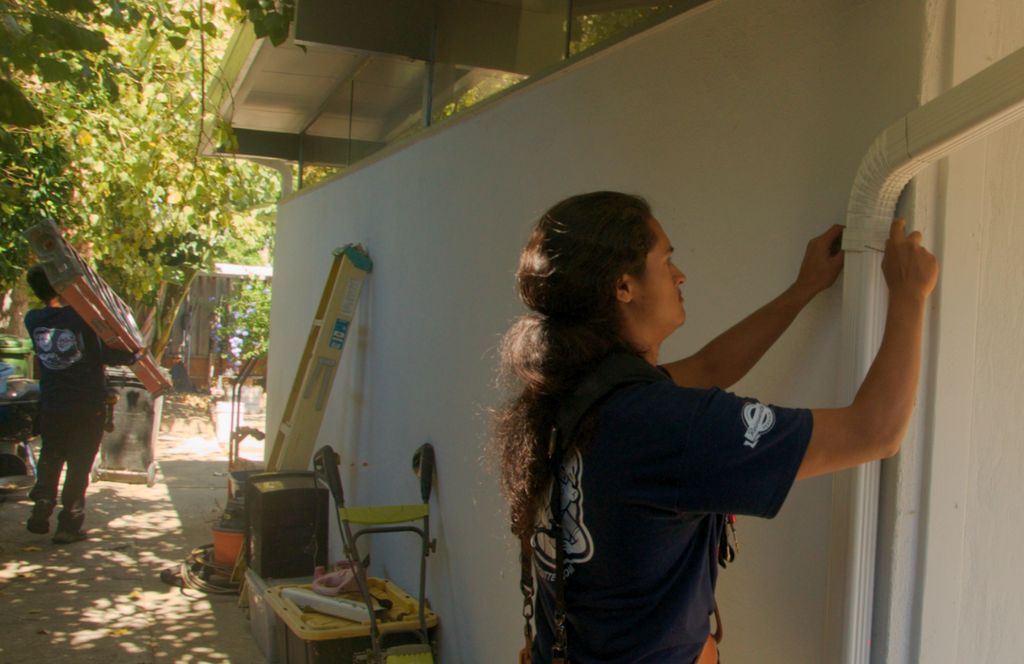
Fitting a downspout elbow against a stucco wall

Quick answer

Rowhouse gutters and scuppers in San Francisco: Most San Francisco rowhouses have a flat or low-pitched roof that drains through a scupper, a short gutter and one or two leaders, so a single clogged outlet can pond water on the roof or send it down the cornice and siding. Keep those few outlets clear before the November rains, make sure each leader runs freely all the way down, and plan ladder access ahead of time, because there is usually no side yard to work from. Call (650) 600-0598 or get a free quote.

Flat roofs, few outlets

How water leaves a San Francisco rowhouse roof

A rowhouse roof does not have a gutter running around all four sides. It has a few outlets, and each one matters.

A lot of San Francisco’s housing predates the war, and it shows at the roofline. In ZIP 94114, U.S. Census Bureau figures show 61 percent of housing units were built in 1939 or earlier. Noe Valley filled in with Victorians from the 1870s on and Edwardians after 1906, and many of those false fronts hide a low-pitched roof. In the Sunset, builders covered the dunes with stucco homes on 25 foot lots from the 1920s through the 1940s, many with red tile trim along the front and a low-slope roof, first built as tar and gravel, behind it.

Rain leaves those roofs through only a few openings. There is usually a scupper, an opening at the roof edge, feeding a short gutter or dropping straight into a leader, which is the downspout. There may be a short rear gutter and an inside corner. A scupper and one leader can be doing the work a whole run of K-style gutter does on a Peninsula ranch house.

Then the water goes underground. According to the San Francisco Public Utilities Commission, San Francisco is the only coastal city in California with a combined sewer system, and stormwater enters it through building roof drains and street catch basins. Roof water and household wastewater share the same pipes, so a leader clog can sit below ground where you cannot see it.

22.89 inaverage yearly rain at NOAA’s San Francisco Downtown station, 1991 to 2020 normals
About 84%of that rain falls from November through March, per the same NOAA normals
61%of housing units in ZIP 94114 built in 1939 or earlier, per the Census Bureau
1 outletoften all a flat rowhouse roof has, which makes it the whole system

One outlet is the whole system

When a flat roof drains through one outlet, that outlet is the entire system. If it clogs, the water does not wait. It ponds on the roof or finds another way down: over the cornice, down the stucco or into the wall. Get that one outlet wrong and the water goes straight into the cornice.

That is also why a rowhouse can look fine for months and fail in a single night. The roof is dry from late spring into fall, grit and leaves collect around the scupper, and the first heavy storm pushes all of it toward one opening at once.

What we find

Where scuppers and leaders fail

Rowhouse drainage tends to fail at the same few spots. Where the water shows up in a storm points to which one.

Most of these show up during or right after rain, so look from the sidewalk or a window while it is still coming down.

What you seeLikely causeUsual fix
Water standing on the roof after the rain stopsScupper or roof outlet blocked with grit, needles or leavesClear the scupper and flush the leader all the way through
Water running down the front wall or corniceOutlet clogged or too small, so water finds the low edgeClear it, then size the outlet and leader for the roof area
Drips or stains at the back of the houseShort rear gutter pitched the wrong way or leaking at a seamReset the slope, reseal, or replace with a seamless gutter
Leader spilling at its jointsA clog lower down, often at an elbowFlush from the top; a clog below ground is a job for a plumber
Rust streaks and pinholesOld galvanized steel worn by salt airReplace with aluminum or copper
Water pouring into the light wellLeader disconnected, cracked or crushedReattach or replace the damaged section

Fog turns debris into sludge

Fog and wind are the local story here. On the west side, summer fog drips steady moisture into gutters for months, so wet debris and roof grit build up in the trough and at the seams. Debris that never dries turns to sludge and holds water against the gutter and the wood behind it. The ocean wind adds its own trouble, pushing runoff past a short gutter lip and loosening hangers and leader straps. Just south in Daly City, the fog belt keeps needles, grit and debris wet year round on shaded north-facing runs.

What lands on your roof depends on the block

Homes near Sunset Boulevard and along Lincoln Way by Golden Gate Park catch needles from the Monterey pines and cypress. Eucalyptus bark and litter come down near Mount Sutro, the Presidio and Stern Grove. In Noe Valley, southern magnolia is the most common street tree on the city’s Street Tree List, ahead of swamp myrtle and flowering cherry, and those big leathery leaves lie flat over an outlet like a lid. Out toward Ocean Beach, the wind packs sand into gutters and scuppers.

Shared walls

No side yard: working around shared walls and light wells

On a rowhouse, the hardest part of a gutter job is often getting to the gutter.

Victorian and Edwardian rowhouses share walls with the neighbors on both sides, so there is no side yard to set a ladder in and nowhere obvious to run a leader except the front steps or the light well. Narrow side gaps and small rear yards are normal in the Sunset and Parkside, where many homes have a short gutter across the front, a flat or low-slope roof behind it and a single leader that drops past the garage door to the sidewalk. Some attached homes even share a downspout with the house next door.

That is why access gets planned on the walkthrough, not argued about on the day. A Solutionist looks at where a ladder can safely stand, how to reach the rear gutter, and whether the leader you care about also carries part of your neighbor’s roof. Shared downspouts get noted in the written scope, so everyone knows what is being touched. On the day, the crew bags the debris and carries it out, so nothing ends up in the light well or on a neighbor’s roof.

Talk to your neighbor first

  • Whether you share a leader, a gutter or a roof outlet at the property line.
  • Which way the roof between your two houses drains.
  • Whether a ladder needs to stand in their yard or on their side of the light well.
  • Any leaks or stains they have noticed on their side of the shared wall.
  • When their own outlets were last cleared, since a shared edge drains both roofs.

Sorting this out ahead of time makes for a quicker visit and fewer surprises.

Fog, salt and storms

Keeping a rowhouse roof draining all winter

With so few outlets, a little attention at the right time goes a long way.

San Francisco gets noticeably more rain than Sunnyvale, and it arrives in a short, heavy season. NOAA’s normals for the San Francisco Downtown station put the average at 22.89 inches a year, with about 84 percent of it falling from November through March. Many of the biggest storms are atmospheric rivers, which is why our rain-ready checklist for Peninsula homes pushes the work into October.

  1. Clear scuppers and outlets in fall.The Sunset’s clearest weather usually runs from September into early November, the best window to clean and fix before the storms.
  2. Flush every leader.Run water in from the top and confirm a steady stream comes out the bottom. A slow leader means a clog at an elbow or below.
  3. Check the street end.If the curb drain out front is buried in leaves, report it to 311 under catch basin maintenance, as the SFPUC asks.
  4. Look at the metal.Rust streaks, pinholes and loose straps on old steel gutters and hangers mean salt air has been at work.
  5. Watch the first big storm.Note where water escapes, then get it on the list for when the weather clears.

Repair, replace or guard

A loose leader strap, a leaking corner or a short gutter pitched the wrong way is usually a gutter repair, done in one visit when possible. When old galvanized runs are rusting through, replacement makes more sense. Aluminum and copper hold up far better near the ocean than old galvanized steel, and we form them on-site as a seamless gutter cut to the exact length of the run. For a Victorian or Edwardian front, copper gutters are worth a look.

Where trees or wind-blown grit keep filling the outlets, BroGuard stainless micro-mesh keeps that grit and debris out while the water runs straight through. A scupper with no trees nearby may only need regular cleanings. Our gutter maintenance program puts those cleanings on the calendar ahead of the storms, and every gutter cleaning includes clearing the scuppers and flushing the leaders, not just the trough. See how we work across the city on our San Francisco page.

Want someone to look at your scuppers and leaders before the storms? Call (650) 600-0598

Get a Free Quote

Frequently Asked Questions

What is a scupper on a San Francisco house?

A scupper is an opening at the roof edge that lets water off a flat or low-pitched roof, usually into a short gutter or straight into a leader, the downspout below it. On many rowhouses a scupper and one leader do the work a whole gutter run does on a pitched roof, so if that one opening clogs, water ponds on the roof or runs down the wall.

Why is water pooling on my flat roof after it rains?

Usually the scupper or roof outlet is partly blocked with grit, needles or leaves, or the leader below it is clogged at an elbow. Clear the opening and flush the leader from the top. If water still backs up after that, the clog may be farther down the line, below ground, where a plumber is the right call.

Can you clean gutters on a rowhouse with no side yard?

Yes. Attached houses with shared walls, light wells and no side yard are regular work for our crews. A Solutionist plans the ladder setup and access during the free walkthrough, and the crew bags the debris and carries it out, so nothing ends up in the light well or on a neighbor’s roof.

What gutter material holds up best near Ocean Beach?

Aluminum and copper hold up far better near the ocean than old galvanized steel, because salt air works on steel gutters, hangers and fasteners. We form aluminum and copper gutters on-site to the exact length of each run, so the only seams are at corners and outlets, which leaves fewer joints for wet fog and salt to work on.

Where does rain from my roof go in San Francisco?

According to the SFPUC, San Francisco is the only coastal city in California with a combined sewer system. Stormwater enters it through building roof drains and street catch basins and is treated along with household wastewater. That means a clogged leader can back up below ground, and a street drain blocked with leaves should be reported to 311.

Free quotes

Ready to get your rowhouse roof draining before the next storm in San Francisco?

Free, no-pressure written estimates from your local crew, based in Sunnyvale and working across San Francisco. Scuppers cleared, leaders flushed and tested, and access planned before anyone climbs a ladder.

The Brothers That Just Do Gutters · Sunnyvale · (650) 600-0598 · Serving Sunnyvale, CA and the Peninsula, from Santa Clara to San Francisco
Gutters for Eichler Homes: What a Low-Slope Roof Needs

Dark seamless gutter running along a modern low-slope roofline

Quick answer

Gutters on an Eichler: An Eichler roof is a shallow, low-pitched plane with wide eaves that sends a lot of water to very few outlets, so the size, slope and placement of each outlet matter more than the length of the gutter. Get those right with a slim seamless gutter that follows the roofline, keep the outlets clear before the rain, and send every downspout away from the glass walls, beam ends and atrium. Call (650) 600-0598 or get a free quote.

Mid-century rooflines

Why an Eichler roof drains differently

Joseph Eichler built his post-and-beam homes for California light, not for gutters. The roof is nearly flat, the eaves are wide and the beams run right out to the edge.

The Peninsula has a lot of these houses. The City of Palo Alto’s Eichler Neighborhood Design Guidelines, adopted by the City Council in April 2018, say well over 2,000 Eichlers were built in Palo Alto, in tracts like Greenmeadow, Fairmeadow and Green Gables. The San Mateo Highlands holds roughly 650 more, by the Eichler Network’s count. In Sunnyvale there are several hundred between Fairbrae, Fairwood, Rancho Verde and Sunnyvale Manor, plus Cherry Chase, and Foster City has them in Bay Vista, Treasure Isle and Marina Point.

The Palo Alto guidelines describe the roofs plainly: slopes that are typically quite shallow, often at a ratio of 3:12, covered with visually flat materials such as tar and gravel or rolled roofing, with exposed rafter tails under extended eaves and wide fascia. That is a very different roof from a 1960s ranch two streets over, with its steeper pitch and long K-style run.

Here is what that means for water. A low-pitched Eichler plane sheds it slowly along the whole overhang and often drains to just one or two outlets. Working from the USGS figure of 27,154 gallons per acre for each inch of rain, a 2,000 square foot roof sends about 1,250 gallons toward its gutters every inch. On an Eichler, a lot of that heads for a single corner.

3:12a typical Eichler roof slope, per Palo Alto’s design guidelines
2,000+Eichlers built in Palo Alto, per the same guidelines
About 650Eichlers in the San Mateo Highlands, per the Eichler Network
~1,250 galoff a 2,000 sq ft roof for each inch of rain, from the USGS per-acre figure

Why the gutter matters more than it looks

The same Palo Alto guidelines list flat roofs that can be prone to leaks among the known weak points of these houses. A gutter that overflows keeps that roof edge wet, and on a post-and-beam house the edge is structure, not trim. The exposed beam ends and the fascia that ties them together sit right under the drip line. When an outlet backs up, the water finds the beam instead of the downspout, and years of that soften the wood until the gutter has nothing solid to hang on.

What we find

Where Eichler gutters usually fail

Most Eichler gutter calls come down to a handful of problems. Where the water shows up during a storm tells you which one you have.

On a ranch house the classic failure is a long run that sags. On an Eichler a gutter is overflowing at a corner, pitched the wrong way or missing on a short run, and on a low-slope roof that water lands right at the glass. Match what you see in a storm to the table below.

What you see in a stormLikely causeUsual fix
Water sheeting off one corner and splashing the glassOne outlet carrying the whole roof plane, or that outlet is cloggedClear it, then size the outlet and downspout for the roof area it drains
Overflow along the full length of the overhangA gutter with no fall, or one pitched away from the outletRehang the run with a steady slope toward the outlet
Drips at the exposed beam endsWater running behind the gutter or spilling at a low spotReset the gutter so the back sits tight and the water stays in the trough
A dark, soft stripe along the wide fasciaYears of overflow soaking the woodRepair the wood before new hangers go in
Puddles on the patio or at the atrium doorA downspout emptying onto hardscape next to the houseDownspout extensions and redirects that carry the water away
Dripping over an entry or a short side runNo gutter on a short runAdd a short seamless gutter with its own outlet

Glass walls make every mistake visible

Eichlers put floor-to-ceiling glass and atrium doors right under the roof edge. A little overflow from a ranch roof lands in a flower bed. On an Eichler it runs down the glass, across the entry walk or into the atrium. Leaves also collect in atrium and courtyard corners, so those inside corners are among the first places we look on a walkthrough.

Original gutters and old seams

Plenty of Eichlers still carry older sectional gutters with open seams, and those leak at joint after joint. A gutter repair can buy time on a system that is otherwise sound: corners resealed, a run re-sloped, new hidden hangers set into solid wood. When the joints keep failing, replacing the run with one continuous seamless gutter is usually the better call, because seams then fall only at the corners and outlets.

Choosing the system

Gutters that keep an Eichler looking like an Eichler

Nobody buys an Eichler for its gutters. The right system works hard and stays out of the way of the long horizontal line that makes the house.

Most Eichlers do best with a fascia gutter or a low-profile K-style run that follows the roofline instead of hanging below it. A clean K-style in a color matched to the fascia usually keeps the roofline crisp and quiet. Our page on gutter styles walks through the profiles, and colored aluminum gutters let the gutter blend into the trim instead of standing out against it.

Fastening takes some thought. Exposed beams and rafter tails mean there is not always a continuous board to screw into. We choose a profile and hanger method that suits that particular roof edge, using roof straps where there is no fascia to fasten to, so the gutter is held firmly without crowding the beam ends.

Size and slope before length

Because so few outlets carry so much water, sizing matters more on an Eichler than on almost any other house on the Peninsula. A 5-inch K-style gutter with 2×3 downspouts handles a lot of single-story roofs when the pitch and downspout spacing are right. Where one outlet drains a big roof plane, going larger helps. By our own install numbers, a 6-inch gutter holds roughly 40 percent more water than a 5-inch, and a 3×4 downspout drains about twice as fast as a 2×3.

Each run then gets a steady fall toward its outlet. On an Eichler that slope has to be set with care, because the fascia line is a strong design feature and a gutter that visibly drops away from it looks wrong. We form every run on our truck as a seamless gutter cut to the exact length, so even a short Eichler run goes up as one piece with no factory seams.

Plan where the water lands

  • Downspouts placed away from glass walls, entry walks and atrium doors.
  • Each outlet sized for the roof area it actually drains.
  • No downspout emptying onto a patio slab tight against the house.
  • Downspout extensions and redirects that carry water to ground sloping away.
  • Soft wood at the beam ends or fascia repaired before new hangers go in.
  • A gutter color that matches the trim so it reads as part of the house.

If you are planning a remodel, bring the gutters into the conversation early. On Eichler remodels we talk through outlet placement before the siding and landscape plans lock it in. If a flat section drains through a roof drain inside the walls, that line belongs with a roofer or plumber.

Year-round care

Keeping a low-slope roof edge clear

A shallow roof does not push debris off the way a steep one does. Leaves and needles settle on it, and they stay.

Low-slope roofs hold debris longer than steep ones, and the trees on Eichler blocks keep supplying it. In Sunnyvale, sycamore, oak, liquidambar and Chinese pistache drop leaves and seed pods from fall into winter, right when the rain arrives, and liquidambar seed balls can block a downspout outright. In Palo Alto, the protected oaks and redwoods add leaves, acorns and needles most of the year. Our guide on how often to clean gutters on the Peninsula lays out the drop calendar tree by tree.

  1. Clean before the rain.Book the main cleaning in fall, before the first real storm, and plan a spring visit if oaks or bay trees hang over the roof.
  2. Clear the outlets, not just the trough.On an Eichler the outlet is the system. Every downspout should be flushed until water runs out the bottom.
  3. Check corners and atrium edges.Inside corners and courtyard edges collect leaves, and they are where overflow usually starts.
  4. Watch the first big storm.From inside, note every spot where water sheets down the glass or drips at a beam.

Guards, needles and embers

Fine redwood and pine needles slip straight through coarse screens. BroGuard is an all-metal stainless micro-mesh guard with an opening finer than a redwood or pine needle, so debris sits on top while heavy rain passes through. It sits flush with a low profile, which suits a clean Eichler edge.

Because it is metal, it also adds nothing flammable at the roofline. CAL FIRE notes that embers can ignite homes up to a mile away, so a gutter full of dry needles matters even outside the mapped hazard zones. Our fire zone gutter check shows where your address falls.

If you would rather not track any of this, our gutter maintenance program schedules visits around the local seasons, and every gutter cleaning includes flushing and testing each downspout.

Own an Eichler and want a straight answer about its gutters? Call (650) 600-0598

Get a Free Quote

Frequently Asked Questions

Do Eichler homes need gutters?

In most cases, yes. A flat or low-pitched Eichler roof sends water off slowly along the whole overhang, so without a gutter it drips onto walkways, soaks the fascia and beam ends, and splashes against the glass walls. A slim gutter that follows the roofline collects that water and sends it to downspouts placed away from the house.

What kind of gutter works best on an Eichler?

Most Eichlers do best with a fascia gutter or a low-profile K-style run that follows the clean roofline instead of hanging below it. A color matched to the trim keeps the line quiet. Where there is no fascia to fasten to, roof straps can hold the gutter without crowding the exposed beams.

Why does water pour off one corner of my Eichler roof?

A low-pitched Eichler roof often drains a whole roof plane to one or two outlets. If that outlet is clogged, too small, or the gutter is pitched away from it, the water spills at the corner. Clear the outlet first. If it still overflows in a heavy storm, the outlet and downspout probably need to be sized for the roof area they drain.

Can overflowing gutters damage Eichler beams?

They can. On a post-and-beam house the beam ends and the wide fascia sit right under the drip line. Years of overflow keep that wood wet until it softens and rots, and soft wood cannot hold gutter hangers. Fixing the gutter early protects the beams, and any damaged wood should be repaired before new hangers go in.

How often should I clean gutters on a low-slope roof?

Most Peninsula homes need a cleaning in fall before the rain and another in spring. Low-slope roofs hold debris longer than steep ones, so Eichlers under oaks, redwoods or liquidambar may need a third visit. Every cleaning should include flushing each downspout, because on an Eichler one blocked outlet can be carrying most of the roof.

Free quotes

Ready for gutters that suit your Eichler, from Sunnyvale to the San Mateo Highlands?

Free, no-pressure written estimates from your local Sunnyvale crew. Outlets sized for the roof, seamless gutters formed on-site and downspouts sent away from the glass.

The Brothers That Just Do Gutters · Sunnyvale · (650) 600-0598 · Serving Sunnyvale, CA and the Peninsula, from Santa Clara to San Francisco
Before the First Atmospheric River: A Rain-Ready Checklist for Peninsula Homes

Before the First Atmospheric River: A Rain-Ready Checklist for Peninsula Homes

Quick answer

Getting Peninsula gutters rain-ready: Do it before the first real storm, usually in October or early November. Clear the debris, flush every downspout, confirm the water drains away from the house, and look for sagging runs, leaking corners and soft fascia. Many of our storms are atmospheric rivers that can drop inches of rain in a day or two, so a gutter that handled a spring shower can still overflow. Wait for the first downpour to show you the problem and you will be calling the same week as everyone else on your street. Call (650) 600-0598 or get a free quote.

Atmospheric rivers

Why the first storm is the one that finds the problems

Peninsula rain does not arrive as a steady drizzle. A lot of it comes in a handful of big storms, and the first one meets a gutter that has been filling up for six dry months.

Sunnyvale and the Peninsula get nearly all of their rain between November and April. Many of the biggest storms are atmospheric rivers, long bands of moisture off the Pacific that can drop inches of rain in a day or two. According to NOAA, atmospheric rivers supply 30 to 50 percent of the West Coast’s yearly precipitation, often in just a few events.

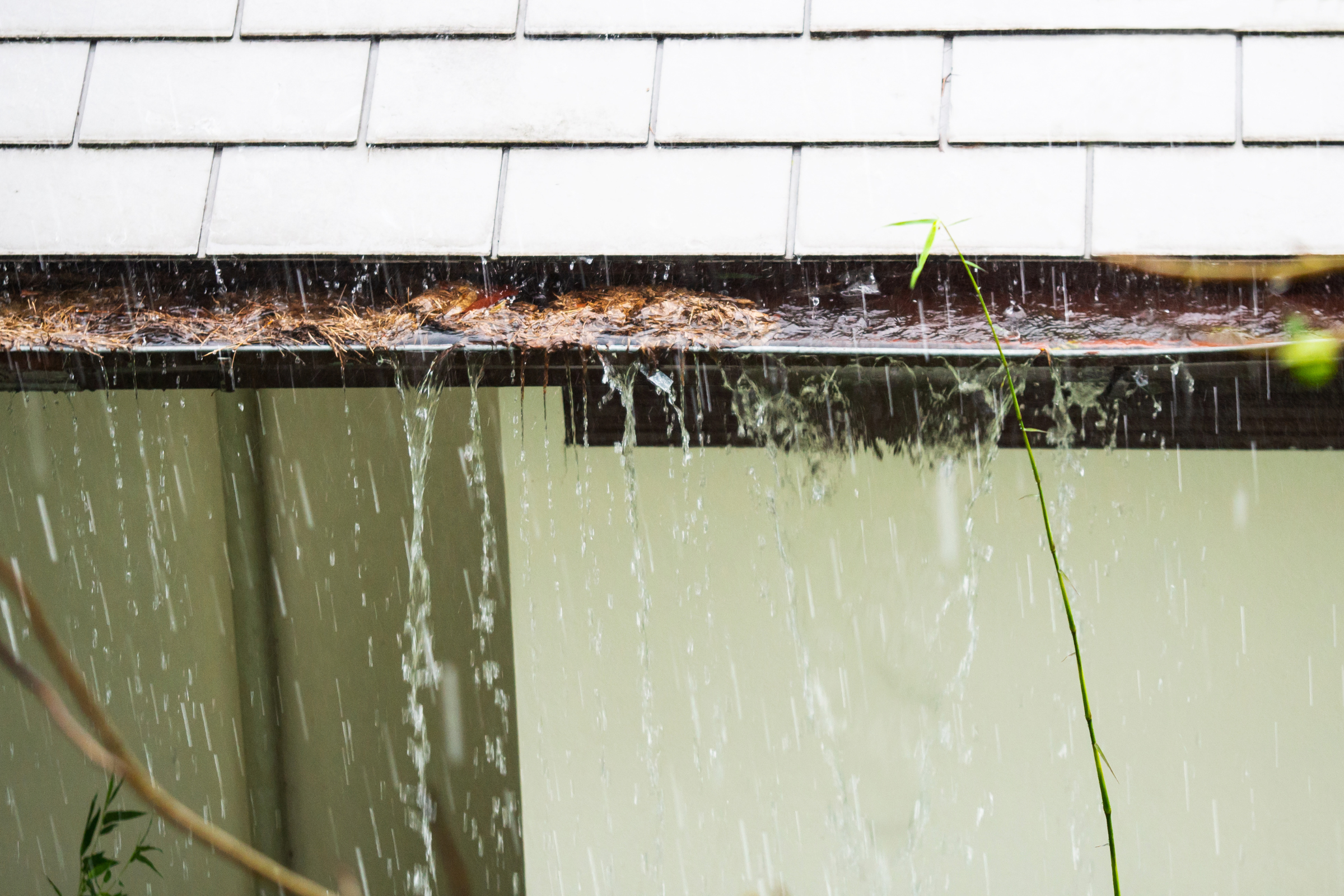
That matters for your gutters. A system that handled a light spring shower without complaint can still overflow when an atmospheric river parks over the Bay. Meanwhile the gutters have spent the dry months collecting leaves, seed balls and needles. The first big storm is when all of that meets a lot of water at once, and it all heads for the downspout openings together.

It is also when calls spike. After the first heavy rain, homeowners across the Peninsula walk outside, see water pouring over the edge of the gutter, and pick up the phone the same week. Getting on the schedule in October means you are not waiting in line while it keeps raining.

30 to 50%of the West Coast’s yearly precipitation comes from atmospheric rivers, per NOAA
Nov to Aprwhen nearly all of the Peninsula’s rain falls
Inchesof rain in a day or two when a strong one stalls over the Bay
Octoberthe time to get on the schedule, before the calls spike

October check, November cleaning

If big plane trees, sycamores or sweetgums hang over your roof, the leaves may not be down until late November, which is why our guide on how often to clean gutters on the Peninsula puts the main cleaning there. Do not let that push the whole job back. Run this checklist and get any repairs done in October, clear the outlets if a storm is on the forecast, and do the full cleaning once the trees are bare.

Before the rain

The seven-point pre-rain checklist

You can do most of this from the ground. Anything that means a ladder at the second-story level is worth handing off.

  1. Clear the debris.Leaves, needles and seed balls packed in the trough cause most overflow. Clogs start where the gutter meets the downspout.
  2. Flush and confirm flow.Run a hose into each section you can safely reach. Water should reach the downspout and come out the bottom in a steady stream.
  3. Check where the water ends up.Follow each downspout to its outlet. Water should land well away from the foundation, on ground that slopes away.
  4. Look for overflow streaks.Dark vertical stripes on siding or stucco, or dirt splashed along the base of a wall, mean water has been spilling over.
  5. Check for sagging and gaps.Sight down each run. It should be straight with a slight fall toward the downspouts, not dipping or pulling away.
  6. Look at seams and corners.Rust spots, peeling paint or drip marks at corners, end caps and joints are where leaks begin.
  7. Press on the fascia.Soft, flaking or discolored wood behind the gutter means water has been getting behind it.

What each finding usually means

A slow downspout means a clog somewhere inside it, often a seed ball or a wad of wet leaves lodged at an elbow. A puddle or bare soil at the outlet means the water is not being carried far enough. Missing or crushed extensions and shifted splash blocks are the most common culprits, and they take minutes to fix. A sag means loose hangers, and a sagging gutter holds standing water and debris that add weight every storm.

Soft fascia is the one not to ignore. The fascia is the board the gutter is fastened to, and once it softens the gutter cannot stay up no matter how good the hangers are. Catching it early keeps a small gutter repair from turning into a bigger one, and our fascia board repair replaces the damaged wood before new hangers go in.

Your quick ground-level list

  • Every downspout has an extension, attached and pointed away from the house.
  • No bare soil, puddle or trench where the water lands.
  • No dark stripes on the wall under the gutter line.
  • Each run looks straight from end to end.
  • No drip marks or rust rings under corners and end caps.
  • Fascia paint is intact and the wood feels solid.

Gutters built for a different rain

When clean is not enough

Plenty of Peninsula rooflines still carry the gutters they were built with, and those systems were never sized for the way the rain arrives now.

A spotless gutter can still overflow in a heavy storm if it is too small for the roof above it, if one downspout is draining too much roof, or if a long run has lost its slope. The way to tell is to watch during the first real rain, ideally a strong one, and note exactly where the water escapes. The pattern points to the fix.

What you see in a heavy stormLikely causeUsual fix
Overflow right at the downspout end, even after a cleaningThe downspout is too small or is draining too much roofA larger downspout or an added drop on a long run
Overflow in the middle of a long runA sag or low spot where water poolsRehang with new hangers and reset the slope
Water shooting over an inside cornerTwo roof planes dumping into one corner at speedA larger gutter profile or a corner adjustment
Overflow along most of the houseA gutter too small for the roof area and pitchUpsizing to a 6-inch or 7-inch seamless gutter
Drips at joints along the runSectional seams with failing sealantReseal, or replace with one continuous seamless run
Water pooling at the foundationShort or missing extensionsExtensions or underground drainage to carry it away

Upsizing and seamless runs

A standard 5-inch gutter is fine for a lot of roofs, but larger or steeper roofs can send more water to the edge in a strong storm than a 5-inch trough and a small downspout can carry. Our pages on 5-inch gutters and 6-inch gutters explain the difference. When a run is replaced, we form seamless gutters on-site in one continuous run, cut to the exact length of your roofline, so there are far fewer joints to fail.

Where extensions would cross a lawn, a walkway or a driveway, underground gutter drainage carries the water away out of sight and out of the way of the mower.

Safety first

Know when to leave it to a crew

Checking your gutters from the ground is reasonable for anyone. A two-story roofline is a different job.

Cleaning a single-story gutter from a stable ladder is something many homeowners handle. On a second story the ladder is taller, the footing is harder to get right, and the work has you reaching while you are up there. That is the part worth handing to a crew with the right equipment and training, especially in October when you are working against the forecast.

  • Any run you cannot reach from a single-story ladder.
  • A downspout that stays slow after you flush it from the top.
  • Sagging runs or gutters pulling away from the house.
  • Soft or rotted fascia behind the gutter.
  • Overflow that comes back right after a cleaning.
  • A tile or steep roof where nobody should be walking.

What our pre-season visit covers

Our Sunnyvale crew clears every trough by hand, flush-tests the downspouts and fixes loose seams in one visit, with a written estimate first. If something needs more than a quick fix, you hear about it with a price in writing before any work starts, and if all you need is a cleaning, that is what we tell you. Every gutter cleaning includes clearing the downspout openings, not just the trough.

If you would rather not think about this every October, our gutter maintenance program schedules visits around the local seasons, so your gutters are cleared before the rain every year. To keep debris out in the first place, BroGuard fine metal mesh keeps leaves, needles and seed pods out of the trough while heavy rain passes through.

Want a second set of eyes before the storms? Call (650) 600-0598

Get a Free Quote

Frequently Asked Questions

When should I get my gutters ready for the rainy season on the Peninsula?

Before the first real storm, usually in October or early November. If big deciduous trees overhang your roof, do the checks and repairs in October and the full cleaning once the leaves are down.

What is an atmospheric river?

A long band of moisture off the Pacific that can drop inches of rain in a day or two. According to NOAA, atmospheric rivers supply 30 to 50 percent of the West Coast’s yearly precipitation, often in just a few storms.

Why do my gutters overflow even after they have been cleaned?

The gutter or downspout may be too small for the roof above it, a long run may have lost its slope, or one downspout may be draining too much roof. Watch where the water escapes in a heavy storm. That pattern points to the fix.

How do I test my downspouts?

Run a garden hose into the gutter at the far end from the downspout and watch. Water should come out the bottom in a steady stream. If it backs up, pools or trickles out slowly, there is a clog somewhere inside the downspout.

How far should downspouts drain from my house?

Well away from the foundation, on ground that slopes away from the house. If you see bare soil, a puddle or a trench where the water lands, add or fix an extension, or consider underground drainage.

Is it safe to clean my own gutters?

Ground-level checks are safe for anyone, and many homeowners clean a single-story gutter from a stable ladder. Second-story rooflines are a different job and are worth handing to a trained crew with the right equipment.

Free quotes

Ready for the first atmospheric river of the season in Sunnyvale and on the Peninsula?

Free, no-pressure written estimates from your local Sunnyvale crew. Troughs cleared by hand, downspouts flush-tested and loose seams fixed in one visit, scheduled before the calls spike.

The Brothers That Just Do Gutters · Sunnyvale · (650) 600-0598 · Serving Sunnyvale, CA and the Peninsula, from Santa Clara to San Francisco

Licensed, Bonded & Insured · California Contractor License #1123680

How Often Should You Clean Your Gutters in Sunnyvale and on the Peninsula?

How Often Should You Clean Your Gutters in Sunnyvale and on the Peninsula?

Quick answer

How often to clean gutters in Sunnyvale and on the Peninsula: Twice a year for most homes, once in late April or May after the oak leaf and catkin drop, and once in the second half of November after the deciduous trees are bare and before the rain gets steady. Homes under redwoods, pines or a big coast live oak usually need a third visit in late summer, when needle drop peaks. The reason is the local trees: they do not all drop at once, so a gutter cleaned only in November spends the rest of the year filling back up. Call (650) 600-0598 or get a free quote.

Two kinds of trees, one rainy season

Why once a year does not hold up on the Peninsula

Most gutter advice is written for places with one big autumn. The leaves come down over a few weeks, you clean up, and you are set. Sunnyvale works differently.

Our streets and yards mix two kinds of trees. Deciduous trees like London plane, sycamore and sweetgum drop in the fall. Evergreens like coast live oak, magnolia, redwood and pine shed a little all year and a lot in spring and late summer. Most blocks have both, so something is always landing on the roof.

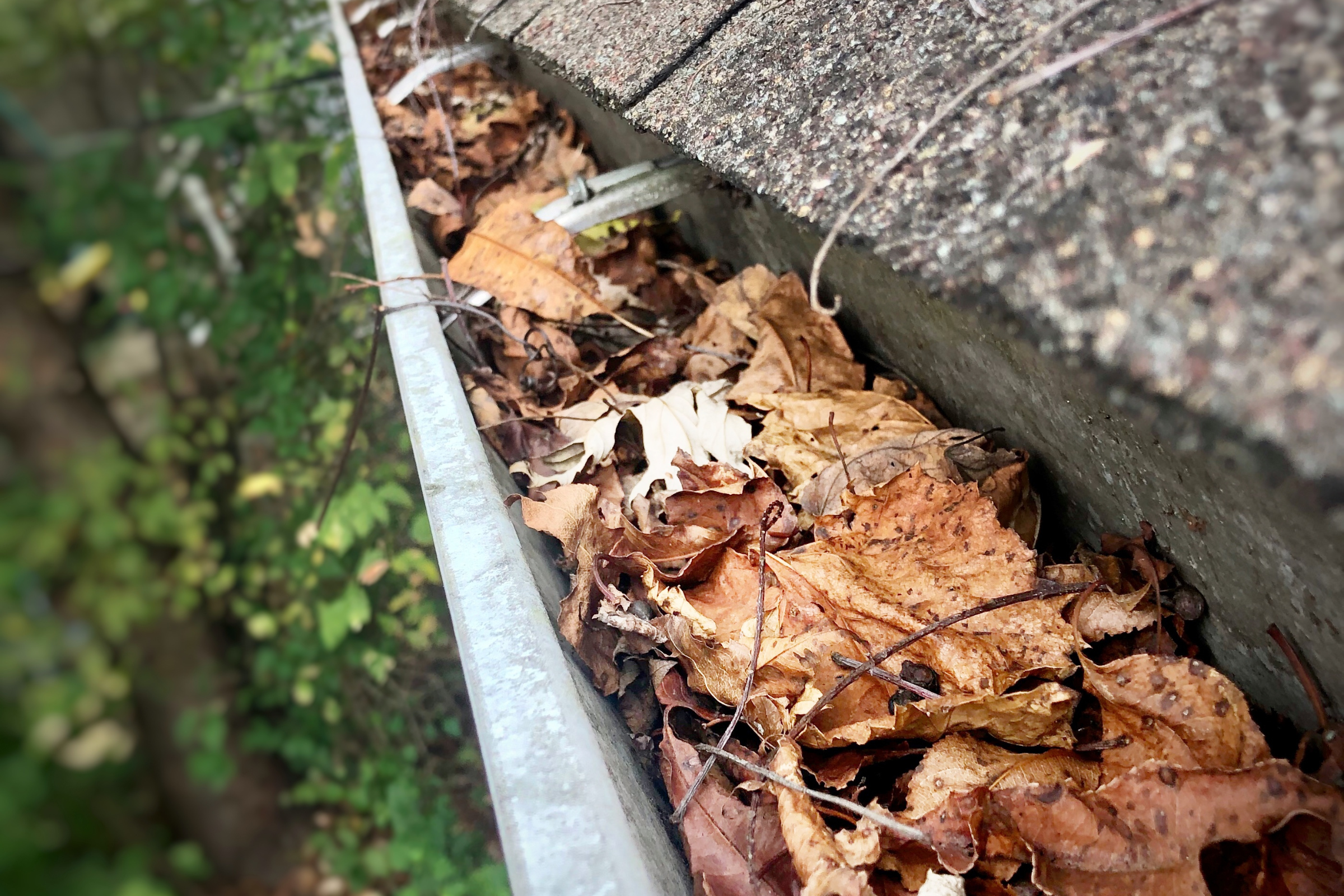
Then there is the timing of the rain. Nearly all of our rain falls between November and April, with January usually the wettest month. Debris that lands in spring and summer sits in a warm, dry gutter for months and packs down into something closer to soil than leaves. When the first real storm hits, the water is not pushing through loose leaves. It is running into a dam.

Plenty of the rooflines we see across the Peninsula are still carrying the gutters they were built with. Those systems were never sized for the way the rain arrives now, so they have less room for error when the outlets are half blocked.

Nov to Aprwhen nearly all of the Peninsula’s rain falls
Januaryusually the wettest month of the year
2xa year for most homes, spring and late November
3xwith redwoods, pines or a big coast live oak

What a once-a-year schedule misses

  • The spring oak drop and catkins, which sit in the trough all summer.
  • Late-summer redwood and pine needles, which mat into a felt layer.
  • Sweetgum seed balls that keep falling after a November cleaning.
  • Sycamore seed fuzz that clogs anything with a screen or filter.
  • Small damage like a loose hanger or a dried-out corner seal, caught a season late.
  • The early storm that arrives before your once-a-year visit does.

The local drop calendar

What lands in Peninsula gutters, tree by tree

Each tree sheds on its own clock and clogs a gutter in its own way. Find the ones over your roofline.

TreeWhat it dropsWhenWhy it clogs
Coast live oakLast year’s leaves and stringy catkinsSpring, as new growth comes inSmall, stiff, curled leaves wedge into downspout openings, and catkins mat when damp
Sycamore and London planeSeed balls in spring, big flat leaves in fallSpring and fallSeed balls break into a fine fuzz, and a few big leaves can cover an outlet on their own
Sweetgum (liquidambar)Spiky seed balls and leavesLate fall into winterSeed balls do not break down or flush. They roll into downspouts and stay there.
RedwoodFine needles and small conesAll year, heaviest in August and SeptemberNeedles pass straight through coarse screens and knit together into a mat
PineNeedles and conesAll year, with a late-summer flushNeedles bridge across outlets and trap everything behind them
MagnoliaLarge leathery leaves and seed podsA little all yearBig leaves lie flat over the outlet like a lid
Ornamental pearPetals, then leavesSpring bloom, fall dropWet petals mat into a slick layer over the outlets

The tree that catches people off guard

Coast live oaks are evergreen, so it is easy to assume they never make a mess. They do. They just do it in spring, dropping last year’s leaves as the new ones come in, along with catkins that cover cars and patio furniture. Add sycamore and London plane seed fuzz and you get the main reason a fall-only cleaning falls short here. If a big oak hangs over your roof, the spring visit is not optional.

Needles change the guard question

Fine redwood needles slip straight through coarse gutter screens. Plenty of homeowners with basic screens are surprised to find their gutters full underneath. If needles are your main problem, the type of gutter guard matters more than whether you have one. BroGuard fine metal mesh keeps oak leaves, pear petals, seed pods and needles out, and it carries a limited lifetime warranty when installed with new gutters.

Spring, summer, fall, winter

Season by season on the Peninsula

What to expect each season and the few things worth doing about it.

Spring: March through May

This is the season that surprises people. Oak leaves, catkins and sycamore fuzz all come down at once, and they are light enough to slip past screens that stop bigger leaves. Clean, or schedule a cleaning, once the drop finishes, usually late April into May. Flush each downspout with a hose and confirm water comes out the bottom, clear any mat sitting on top of guards, and check that downspout extensions still point away from the foundation after the winter storms.

Summer: June through August

Summer is dry, which makes it the best time to find problems before the rain does. Walk the house and look for sagging sections, separated seams and gutters pulling away from the fascia. Check for peeling sealant at inside and outside corners, the most common leak points, and look for a visible water line that shows a run has lost its slope. Book any gutter repairs now, while the roof is dry and schedules are open. If a redwood or pine is close, plan the late-summer visit for the needle flush.

Fall: September through November

Now the deciduous trees take their turn. Big plane and sycamore leaves, sweetgum seed balls and the summer’s needle carryover make this the biggest load of the year. Timing matters more than anything. Clean too early and the trees refill the gutters before the rain starts. Clean too late and the first storm finds them full. For most Peninsula homes the best window is mid to late November, the most important gutter cleaning of the year. Make sure the downspout openings get cleared, not just the trough.

Winter: December through February

Winter is mostly watching, and the best time to watch is during a real storm. A few minutes at the window in heavy rain tells you more than an hour on a ladder in July. Stay off ladders and the roof while things are wet.

  • Water spilling over the front edge means a clog or a downspout that cannot keep up.
  • Drips at corners and end caps mean a seam that needs resealing.
  • Erosion or a puddle at a downspout means the water is not carried far enough.
  • Any section that overflows goes on the list for when the weather clears.

The simple version

Set your own Peninsula gutter schedule

If you would rather not track which tree drops what, this rhythm works for most homes from Santa Clara to San Mateo.

  1. Spring reset.Late April or May, once the oak leaves, catkins and seed fuzz are down.
  2. Summer walk-around.June or July, from the ground. Look for sags, gaps and dried-out corner seals and book repairs.
  3. Needle visit if needed.Late summer for homes under redwoods, pines or heavy overhanging branches.
  4. The main cleaning.The second half of November, after the leaves and before the rain gets steady.
  5. Watch the first big storm.Overflow or a dry downspout tells you what to fix before January.
  6. Adjust next year.If a run overflowed, add a visit or a guard for that section.

When an early storm beats the schedule

Some years a big storm arrives before the trees are done. If one is on the forecast in October and your gutters are already holding a summer’s worth of needles and spring oak leaves, do not wait for late November. Get the outlets and downspouts cleared first, then do the full cleaning after the leaves are down. Our rain-ready checklist for Peninsula homes covers that pre-storm pass step by step.

By neighborhood

Flat lots in Sunnyvale and Santa Clara with a street tree or two usually do fine on two visits. Older neighborhoods with mature canopy, like Los Altos, Old Palo Alto and Menlo Park, often need three. In the wooded hills of Los Altos Hills and Woodside, dry needles in the gutter during the long dry season are also ember fuel, so keeping the trough clear matters for fire safety, and our fire zone gutter check is built for those homes.

That is the idea behind our gutter maintenance program. The visits are scheduled around the local drop calendar, so nobody has to remember. If you would like a straight answer about your own roofline and trees, we will come take a look and tell you what we see.

Want a schedule built for your trees? Call (650) 600-0598

Get a Free Quote

Frequently Asked Questions

How often should I clean my gutters in the Bay Area?

Twice a year for most homes: once in late spring after the oak leaf and catkin drop, and once in late fall after the deciduous trees are bare. Homes with redwoods, pines or heavy tree cover often need a third cleaning in late summer.

When is the best time to clean gutters in Sunnyvale?

Mid to late November is the most important window, after most leaves are down and before the rainy season settles in. Late April into May is the second key window.

Why are my gutters full in the spring?

Coast live oaks shed their old leaves in spring as new growth comes in, and oaks release catkins at the same time. Sycamore and London plane seed fuzz adds to it. It is the main reason a once-a-year fall cleaning falls short here.

Do gutter guards mean I never have to clean my gutters?

No. Guards cut down on what reaches the trough, but debris still collects on top of them, and coarse screens let fine needles through. Guards reduce maintenance; they do not eliminate it.

Do redwood needles get through gutter guards?

Through coarse screens, yes. Fine redwood needles pass straight through and collect underneath. A fine metal mesh like BroGuard keeps them out, which is why the guard type matters most when needles are the problem.

Why do sweetgum seed balls clog downspouts?

They are hard and spiky, they do not break down, and water will not flush them. They roll along the trough into the downspout opening and lodge there, which is why the fall cleaning has to clear the outlets, not just the gutter.

Free quotes

Ready for a gutter schedule that fits your trees in Sunnyvale and on the Peninsula?

Free, no-pressure written estimates from your local Sunnyvale crew. Cleanings timed to the local drop calendar, repairs while it is dry, and BroGuard fine metal mesh for homes under redwoods, pines and oaks.

The Brothers That Just Do Gutters · Sunnyvale · (650) 600-0598 · Serving Sunnyvale, CA and the Peninsula, from Santa Clara to San Francisco

Licensed, Bonded & Insured · California Contractor License #1123680