

Quick answer
Getting Peninsula gutters rain-ready: Do it before the first real storm, usually in October or early November. Clear the debris, flush every downspout, confirm the water drains away from the house, and look for sagging runs, leaking corners and soft fascia. Many of our storms are atmospheric rivers that can drop inches of rain in a day or two, so a gutter that handled a spring shower can still overflow. Wait for the first downpour to show you the problem and you will be calling the same week as everyone else on your street. Call (650) 600-0598 or get a free quote.
Atmospheric rivers
Why the first storm is the one that finds the problems
Peninsula rain does not arrive as a steady drizzle. A lot of it comes in a handful of big storms, and the first one meets a gutter that has been filling up for six dry months.
Sunnyvale and the Peninsula get nearly all of their rain between November and April. Many of the biggest storms are atmospheric rivers, long bands of moisture off the Pacific that can drop inches of rain in a day or two. According to NOAA, atmospheric rivers supply 30 to 50 percent of the West Coast’s yearly precipitation, often in just a few events.
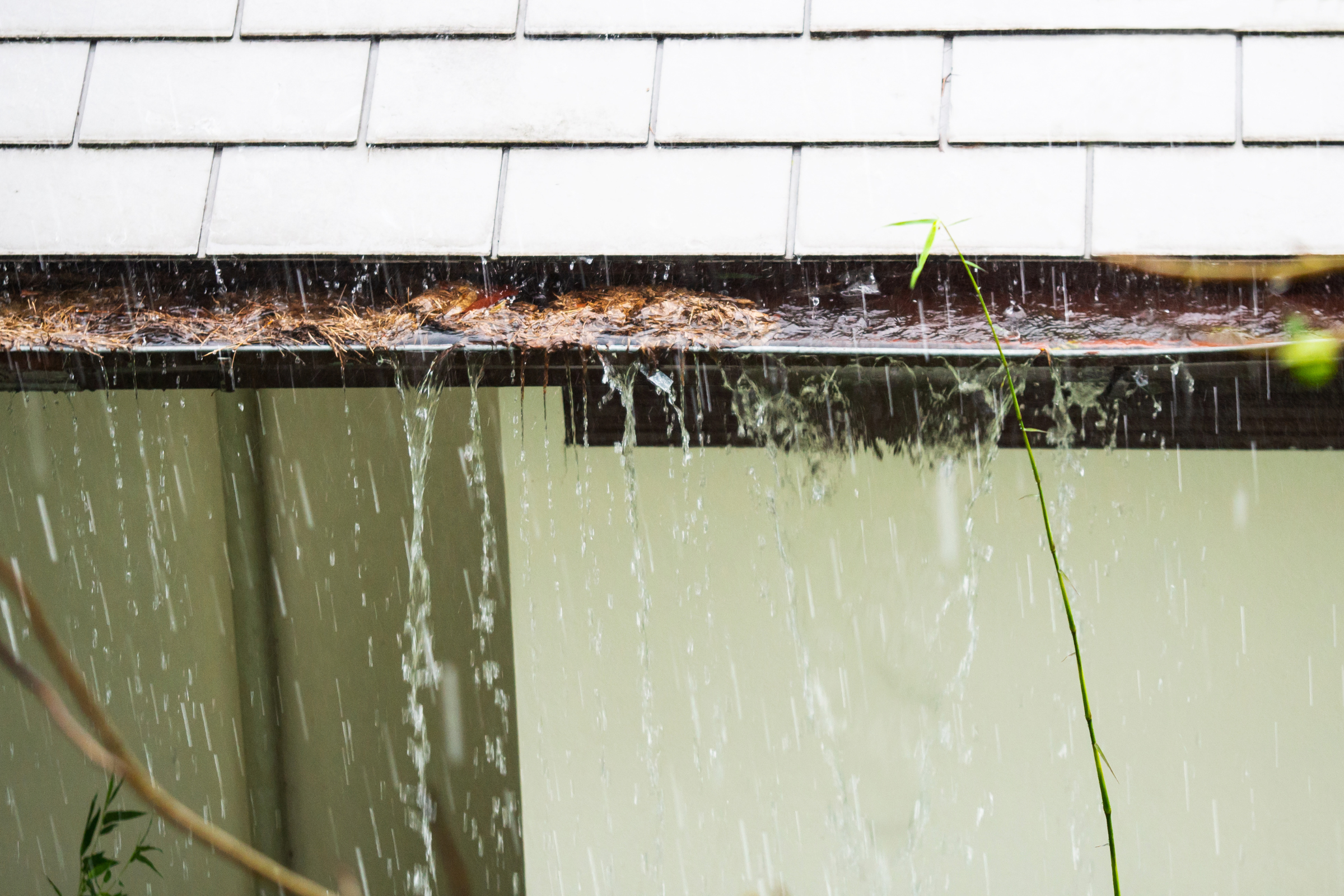
That matters for your gutters. A system that handled a light spring shower without complaint can still overflow when an atmospheric river parks over the Bay. Meanwhile the gutters have spent the dry months collecting leaves, seed balls and needles. The first big storm is when all of that meets a lot of water at once, and it all heads for the downspout openings together.
It is also when calls spike. After the first heavy rain, homeowners across the Peninsula walk outside, see water pouring over the edge of the gutter, and pick up the phone the same week. Getting on the schedule in October means you are not waiting in line while it keeps raining.
October check, November cleaning
If big plane trees, sycamores or sweetgums hang over your roof, the leaves may not be down until late November, which is why our guide on how often to clean gutters on the Peninsula puts the main cleaning there. Do not let that push the whole job back. Run this checklist and get any repairs done in October, clear the outlets if a storm is on the forecast, and do the full cleaning once the trees are bare.
Before the rain
The seven-point pre-rain checklist
You can do most of this from the ground. Anything that means a ladder at the second-story level is worth handing off.
- Clear the debris.Leaves, needles and seed balls packed in the trough cause most overflow. Clogs start where the gutter meets the downspout.
- Flush and confirm flow.Run a hose into each section you can safely reach. Water should reach the downspout and come out the bottom in a steady stream.
- Check where the water ends up.Follow each downspout to its outlet. Water should land well away from the foundation, on ground that slopes away.
- Look for overflow streaks.Dark vertical stripes on siding or stucco, or dirt splashed along the base of a wall, mean water has been spilling over.
- Check for sagging and gaps.Sight down each run. It should be straight with a slight fall toward the downspouts, not dipping or pulling away.
- Look at seams and corners.Rust spots, peeling paint or drip marks at corners, end caps and joints are where leaks begin.
- Press on the fascia.Soft, flaking or discolored wood behind the gutter means water has been getting behind it.
What each finding usually means
A slow downspout means a clog somewhere inside it, often a seed ball or a wad of wet leaves lodged at an elbow. A puddle or bare soil at the outlet means the water is not being carried far enough. Missing or crushed extensions and shifted splash blocks are the most common culprits, and they take minutes to fix. A sag means loose hangers, and a sagging gutter holds standing water and debris that add weight every storm.
Soft fascia is the one not to ignore. The fascia is the board the gutter is fastened to, and once it softens the gutter cannot stay up no matter how good the hangers are. Catching it early keeps a small gutter repair from turning into a bigger one, and our fascia board repair replaces the damaged wood before new hangers go in.
Your quick ground-level list
- Every downspout has an extension, attached and pointed away from the house.
- No bare soil, puddle or trench where the water lands.
- No dark stripes on the wall under the gutter line.
- Each run looks straight from end to end.
- No drip marks or rust rings under corners and end caps.
- Fascia paint is intact and the wood feels solid.
Gutters built for a different rain
When clean is not enough
Plenty of Peninsula rooflines still carry the gutters they were built with, and those systems were never sized for the way the rain arrives now.
A spotless gutter can still overflow in a heavy storm if it is too small for the roof above it, if one downspout is draining too much roof, or if a long run has lost its slope. The way to tell is to watch during the first real rain, ideally a strong one, and note exactly where the water escapes. The pattern points to the fix.
| What you see in a heavy storm | Likely cause | Usual fix |
|---|---|---|
| Overflow right at the downspout end, even after a cleaning | The downspout is too small or is draining too much roof | A larger downspout or an added drop on a long run |
| Overflow in the middle of a long run | A sag or low spot where water pools | Rehang with new hangers and reset the slope |
| Water shooting over an inside corner | Two roof planes dumping into one corner at speed | A larger gutter profile or a corner adjustment |
| Overflow along most of the house | A gutter too small for the roof area and pitch | Upsizing to a 6-inch or 7-inch seamless gutter |
| Drips at joints along the run | Sectional seams with failing sealant | Reseal, or replace with one continuous seamless run |
| Water pooling at the foundation | Short or missing extensions | Extensions or underground drainage to carry it away |
Upsizing and seamless runs
A standard 5-inch gutter is fine for a lot of roofs, but larger or steeper roofs can send more water to the edge in a strong storm than a 5-inch trough and a small downspout can carry. Our pages on 5-inch gutters and 6-inch gutters explain the difference. When a run is replaced, we form seamless gutters on-site in one continuous run, cut to the exact length of your roofline, so there are far fewer joints to fail.
Where extensions would cross a lawn, a walkway or a driveway, underground gutter drainage carries the water away out of sight and out of the way of the mower.
Safety first
Know when to leave it to a crew
Checking your gutters from the ground is reasonable for anyone. A two-story roofline is a different job.
Cleaning a single-story gutter from a stable ladder is something many homeowners handle. On a second story the ladder is taller, the footing is harder to get right, and the work has you reaching while you are up there. That is the part worth handing to a crew with the right equipment and training, especially in October when you are working against the forecast.
- Any run you cannot reach from a single-story ladder.
- A downspout that stays slow after you flush it from the top.
- Sagging runs or gutters pulling away from the house.
- Soft or rotted fascia behind the gutter.
- Overflow that comes back right after a cleaning.
- A tile or steep roof where nobody should be walking.
What our pre-season visit covers
Our Sunnyvale crew clears every trough by hand, flush-tests the downspouts and fixes loose seams in one visit, with a written estimate first. If something needs more than a quick fix, you hear about it with a price in writing before any work starts, and if all you need is a cleaning, that is what we tell you. Every gutter cleaning includes clearing the downspout openings, not just the trough.
If you would rather not think about this every October, our gutter maintenance program schedules visits around the local seasons, so your gutters are cleared before the rain every year. To keep debris out in the first place, BroGuard fine metal mesh keeps leaves, needles and seed pods out of the trough while heavy rain passes through.
Want a second set of eyes before the storms? Call (650) 600-0598
Get a Free QuoteFrequently Asked Questions
Before the first real storm, usually in October or early November. If big deciduous trees overhang your roof, do the checks and repairs in October and the full cleaning once the leaves are down.
A long band of moisture off the Pacific that can drop inches of rain in a day or two. According to NOAA, atmospheric rivers supply 30 to 50 percent of the West Coast’s yearly precipitation, often in just a few storms.
The gutter or downspout may be too small for the roof above it, a long run may have lost its slope, or one downspout may be draining too much roof. Watch where the water escapes in a heavy storm. That pattern points to the fix.
Run a garden hose into the gutter at the far end from the downspout and watch. Water should come out the bottom in a steady stream. If it backs up, pools or trickles out slowly, there is a clog somewhere inside the downspout.
Well away from the foundation, on ground that slopes away from the house. If you see bare soil, a puddle or a trench where the water lands, add or fix an extension, or consider underground drainage.
Ground-level checks are safe for anyone, and many homeowners clean a single-story gutter from a stable ladder. Second-story rooflines are a different job and are worth handing to a trained crew with the right equipment.
Free quotes
Ready for the first atmospheric river of the season in Sunnyvale and on the Peninsula?
Free, no-pressure written estimates from your local Sunnyvale crew. Troughs cleared by hand, downspouts flush-tested and loose seams fixed in one visit, scheduled before the calls spike.
The Brothers That Just Do Gutters · Sunnyvale · (650) 600-0598 · Serving Sunnyvale, CA and the Peninsula, from Santa Clara to San Francisco
Licensed, Bonded & Insured · California Contractor License #1123680